10 Key Things You Must Know About Bridging Visas in Australia
April 9, 2026

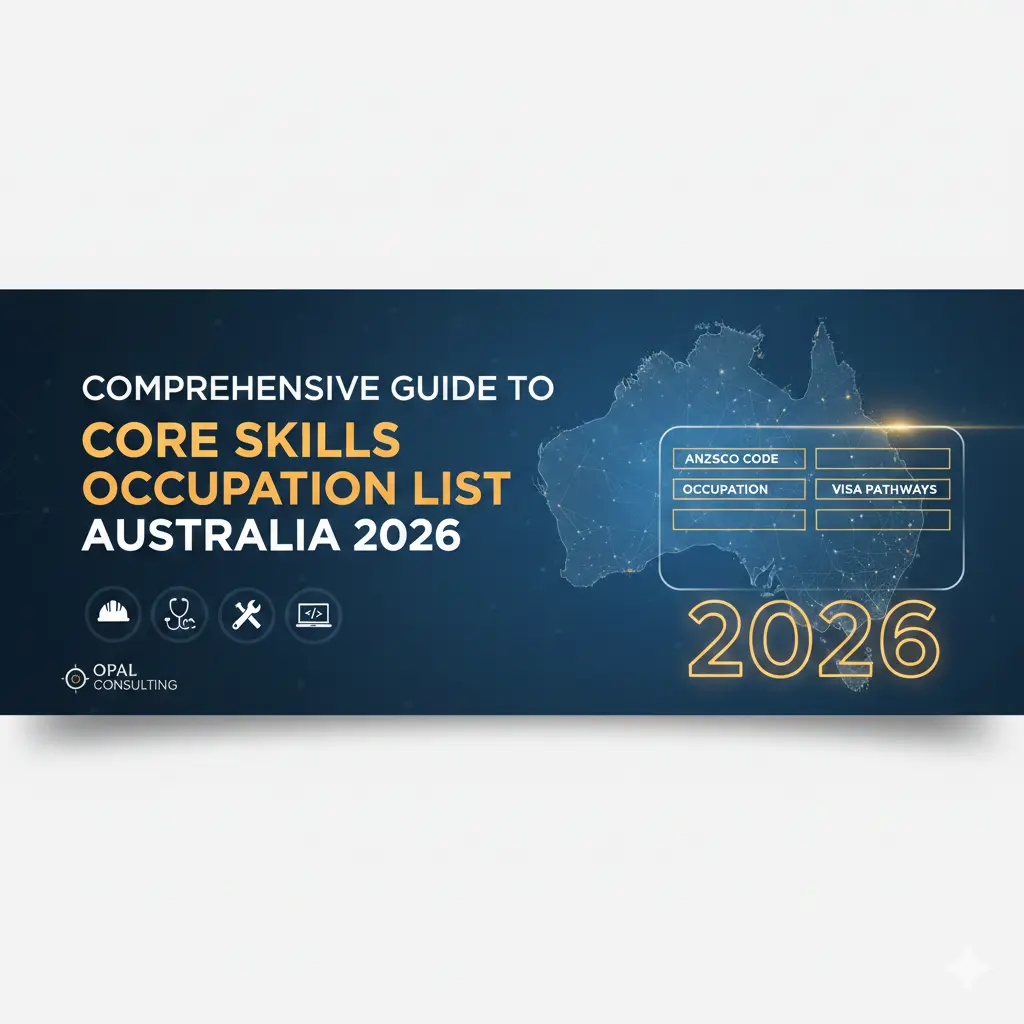
Australia continues to evolve its skilled migration system, and one of the most important developments for skilled workers is the Core Skills Occupation List (COSL) — sometimes also referred to as the Core Skills Occupations List (CSOL). Understanding the COSL and how it affects visa pathways is essential for anyone planning to work, migrate, or secure permanent residency in Australia in 2026. In this guide, we break down everything you need to know about the COSL 2026 occupations, how it impacts visa eligibility, jobs included, and the benefit of points boosts linked to eligible professions.
The Core Skills Occupation List (COSL) is a modern occupation list developed as part of Australia’s skilled migration reform. It identifies occupations that are considered important for the nation’s labour market and economy. The COSL applies primarily to:
Introduced by Jobs and Skills Australia (JSA), this list includes hundreds of occupations identified as in demand, replacing older skilled lists and creating a more unified approach to skilled migration.
The COSL plays a pivotal role in determining which occupations are eligible for many skilled visas, especially employer-sponsored pathways. This means that if your nominated occupation does not appear on the list, your visa application under specific streams might not be accepted.
✔ Broadens eligibility for skilled migration pathways
✔ Ensures occupations reflect current labour market demands
✔ Helps employers sponsor overseas talent
✔ Promotes economic growth in priority areas
✔ Supports long-term and temporary visa streams
COSL is updated periodically to reflect labour shortages, industry input, and national skill priorities. As of 2026, it continues to cover 456 occupations across industries like healthcare, construction, IT, engineering, agriculture, hospitality and more.
The COSL doesn’t directly affect some points-based visas such as the 189 Skilled Independent Visa or the 190 State Nomination Visa, which use other lists like the MLTSSL or state lists. But for employer-sponsored and employer-nominated streams, having an occupation on COSL is often mandatory.
In general, having a COSL occupation increases your options significantly. Many occupations on COSL also overlap with long-term skilled lists, increasing pathways to both temporary and permanent visas.
Here’s a small sample of occupations from the COSL to help you see the kind of roles included (with ANZSCO codes):
| ANZSCO Code | Occupation Title (COSL 2026) |
| 111111 | Chief Executive or Managing Director |
| 111211 | Corporate General Manager |
| 131112 | Sales and Marketing Manager |
| 132311 | Human Resource Manager |
| 133111 | Construction Project Manager |
| 134311 | School Principal |
| 135111 | Chief Information Officer |
| 141311 | Hotel or Motel Manager |
| 254499 | Registered Nurse |
| 261313 | Software Engineer |
| 321211 | Motor Mechanic |
| 351311 | Chef |
| 451711 | Flight Attendant |
| 599915 | Clinical Coder |
| 639211 | Retail Buyer |
Note: This is a sample list — the full COSL contains many more occupations. Also, exact lists are published periodically by the Australian Government and can change.
When planning migration in 2026, understanding the Core Skills Occupation List (COSL) is vital for these reasons:
If you want to work in Australia under employer sponsorship—such as SID visas—your occupation must be on COSL. If not, your employer may not be able to nominate you.
COSL occupations are often linked to permanent pathways. For example, those on COSL under the 186 Direct Entry stream may gain permanent residency more directly.
Compared to older lists, COSL includes many new roles that better reflect modern industries — like cyber roles, digital marketing positions, and niche specialist roles added recently.
While COSL primarily affects employer-sponsored and employer-nominated visas, some independent skilled categories are influenced indirectly because occupations tied to COSL may also be in demand on other lists like the Occupation Shortage List (OSL) or priority lists.
In some skilled pathways such as state-nominated visas, having an occupation in demand — often aligned with COSL fields — may result in:
🔹 Lower points thresholds
🔹 Priority processing in invitation rounds
🔹 Bonus points in certain nomination scenarios
Although COSL itself does not directly grant points like the MLTSSL for points tests, the demand for COSL roles often mirrors occupations that give applicants an indirect advantage through state nomination or faster processing.
Here’s how to make the most of the COSL if you’re planning skilled migration:
Always ensure your job matches the exact ANZSCO code listed in COSL; similar job titles may not qualify if the code differs.
Government pages, Jobs and Skills Australia publications, and legal instruments list the official COSL occupations.
✔ Monitor Updates
COSL is reviewed regularly. Jobs that are added or removed may change your eligibility for certain visas or employer nominations.
Combine COSL research with other skilled lists (e.g., MLTSSL, OSL, state lists) for a comprehensive migration strategy.
It’s important to understand the distinction between COSL and other Australian occupation lists:
| List | Purpose | Main Visa Paths |
| COSL | Core skills priority occupations | SID, 186 DE |
| MLTSSL | Long-term strategic skills | 189, 190, 491 |
| OSL | Occupation shortages | Influences nominations |
COSL focuses primarily on employer-driven pathways — so if you’re seeking independent permanent residency you’ll often refer to lists like MLTSSL. However, COSL occupations can often overlap with these lists, giving dual pathways to applicants.
The Australian government updates the list annually based on advice from Jobs and Skills Australia. For 2026, the focus has shifted heavily toward:
If your role is in one of these sectors, you are in a “priority” bracket, often resulting in faster visa processing times.
The Core Skills Occupation List (COSL 2026 occupations) is a central piece of Australia’s skilled migration puzzle — especially for those targeting employer-sponsored visas, direct entry permanent residency, and emerging in-demand professions. It continues to modernise Australia’s approach to immigration by:
⭐ Reflecting real labour market needs
⭐ Providing a broader list for employers and migrants
⭐ Allowing access to multiple skilled pathways
⭐ Supporting nation-building industries
If your occupation aligns with COSL, your chances for sponsored visas and long-term career opportunities in Australia can improve — but staying updated and strategizing your skills assessment and visa pathway is crucial.
3. Can COSL occupations change?
Yes. The list is reviewed periodically based on labour market data and government consultation, and occupations can be added or removed.

March 16, 2026

March 12, 2026

February 17, 2026

February 10, 2026
Join our FB Group page for regular updates on Immigration changes