
10 Key Things You Must Know About Bridging Visas in Australia
April 9, 2026

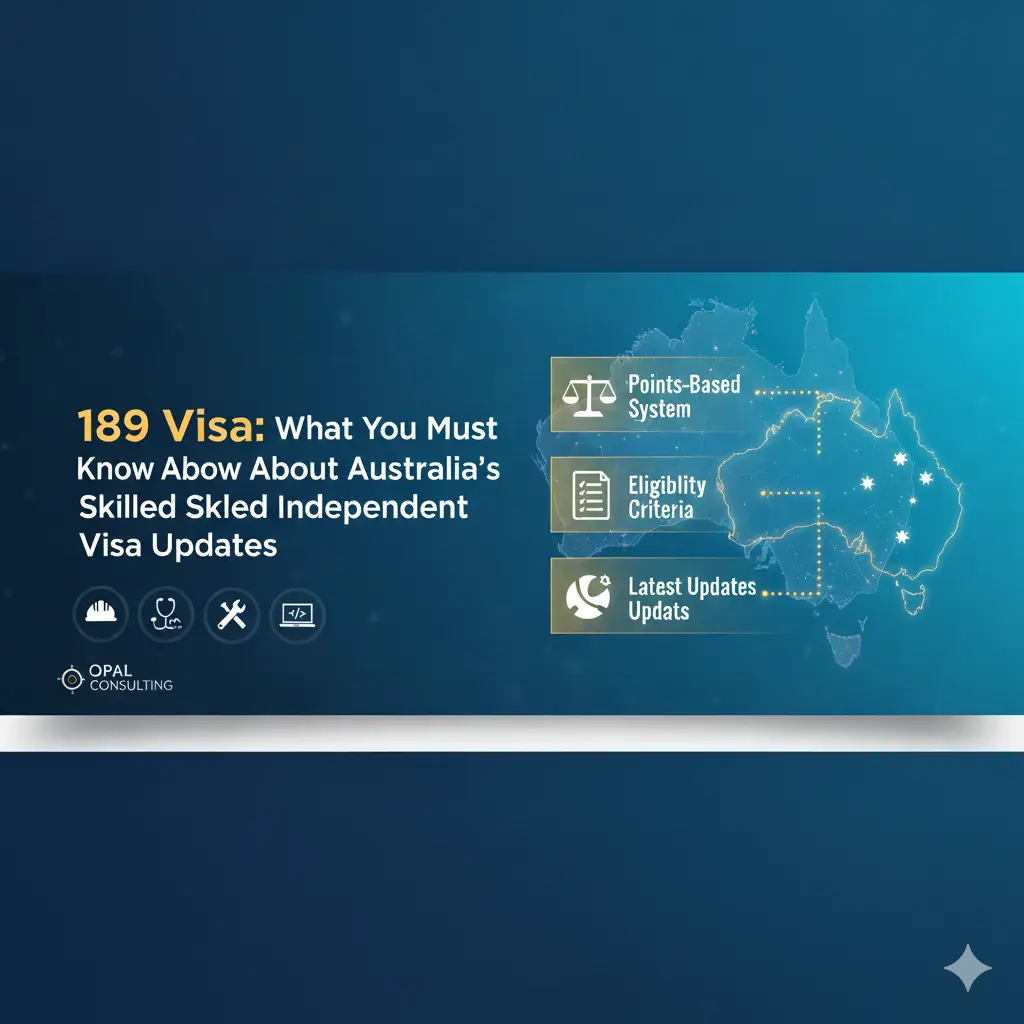
If you’re planning to apply for the Australia Subclass 189 Skilled Independent Visa in 2026, it’s important to understand the latest changes shaping the migration program. The 189 visa has long been one of the most sought-after pathways to permanent residency in Australia, allowing skilled workers to live, work, and study anywhere in the country without sponsorship. But with policy updates underway, competition and selection dynamics are evolving.
In this blog, we’ll explain the major changes to the 189 visa in 2026, how these changes affect you, and practical strategies to improve your chances of receiving an invitation. Let’s dive in.
Before we jump into what’s changing, here’s a quick refresher on what the 189 Skilled Independent Visa is:
Now let’s look at what’s changing in 2026 and why these updates matter more than ever.
One of the biggest changes affecting the 189 visa in 2026 is the shift to more predictable invitation rounds.
In the past, invitation rounds were irregular—meaning applicants weren’t always sure when the Department of Home Affairs (DHA) would issue invitations. But under the new system, invitations are scheduled quarterly (every three months), creating a clear calendar for applicants.
Another major change in 2026 is the introduction of a tiered occupation prioritisation model within the 189 invitation process.
Under this approach, occupations are grouped into tiers based on factors such as national priority, critical skill shortages, and workforce demand. Categories might include:
These are highly specialized roles with years of training. Think Surgeons, Cardiologists, and Oncologists.
This includes the backbone of Australia’s social infrastructure: Registered Nurses, Early Childhood Teachers, Secondary Teachers, and Social Workers.
With Australia’s massive housing and energy goals, Tier 3 focuses on Construction Managers, Electricians, Civil Engineers, and Renewable Energy experts.
This tier includes ICT Business Analysts, Software Engineers, and Accountants. These are occupations with thousands of applicants in the pool.
In previous years, invitations were mostly driven by overall points. But now:
This change aims to align 189 visa invitations more closely with Australia’s labour market needs.
The total number of 189 visa places allocated in the migration planning levels remains limited. In the 2025–26 program, allocations for the Skilled Independent category are smaller compared to earlier years.
In 2026, Australia continues to refine its Skilled Occupation List (SOL) and priority sectors to address long-term shortages. Occupations such as healthcare professionals, educators, engineers, and trades workers remain in high demand.
Applicants in these categories are more likely to benefit from the tiered system and receive invitations, even if their overall points are not the highest.
While the minimum points threshold for 189 remains at 65 points, changes to English language test requirements have taken effect in recent years. New language test equivalency rules and tighter requirements emphasise strong English proficiency.
The 189 visa continues to use the core SkillSelect points test, but applicants need to be aware of how competitive the pool has become.
In 2026, candidates with 80+ points are generally more competitive, and in some high-demand occupations, scores might need to be even higher.
While processing times vary, recent data suggests that most skilled visa applications could be processed within 8–9 months for priority occupations.
✅ Submit your EOI early and well before the next quarterly round.
✅ Ensure your skills assessment is valid and up-to-date.
✅ Regularly update your documentation and points if new evidence (work experience, qualifications) becomes available.
✅ Consider parallel pathways—such as 190 (state-nominated) or 491 (regional)—if you are struggling to gain an invitation through 189.
In 2026, while offshore applicants can still receive invitations, there is strong priority for onshore skilled workers, particularly those already in the Australian labour market.
This means:
The short answer: Yes — but with a strategic approach.
The 189 visa remains one of the most valuable routes to Australian permanent residency. However, due to changes in invitation structure, occupation prioritisation, and heightened competition, your preparation and strategy matter more than ever.
If you:
✔ Are in a high-priority occupation,
✔ Have strong English skills,
✔ Score well on the points test,
✔ And plan your EOI submissions strategically,
your chances of receiving an invitation in 2026 remain good. But if your occupation is oversupplied or your points are borderline, consider supplementing your application with state nomination routes or gaining additional Australian work experience.
The Subclass 189 visa continues to evolve in response to Australia’s broader economic and workforce needs. The key changes in 2026—such as quarterly invitations, a tiered occupation system, and focused priority for high-demand skills—mean applicants must now be more strategic than ever.
Staying updated, improving your points, and optimising your application strategy will be the difference between getting invited and waiting longer. Good luck with your 189 visa journey!
The main 189 visa 2026 changes include quarterly invitation rounds, a tiered occupation prioritisation system, stronger focus on high-demand skills, and limited overall visa places. These changes aim to better align skilled migration with Australia’s labour market needs and make the selection process more structured but competitive.
The minimum points requirement for the Subclass 189 visa remains 65 points, but meeting the minimum does not guarantee an invitation. Due to increased competition in 2026, most successful applicants score 80 points or higher, especially in popular or general occupations.
The short answer: Yes — but with a strategic approach. The 189 visa remains one of the most valuable routes to Australian permanent residency. However, due to changes in invitation structure, occupation prioritisation, and heightened competition, your preparation and strategy matter more than ever.
March 16, 2026

March 12, 2026

February 17, 2026

February 10, 2026
Join our FB Group page for regular updates on Immigration changes